OIG: Medicare could have paid an estimated $2.2 billion less for sepsis
Hospitals billed 615,007 Medicare stays in fiscal 2024 with sepsis but no organ dysfunction code. CMS's 2027 payment weights still pay a sepsis stay 50.6% more than a pneumonia stay.
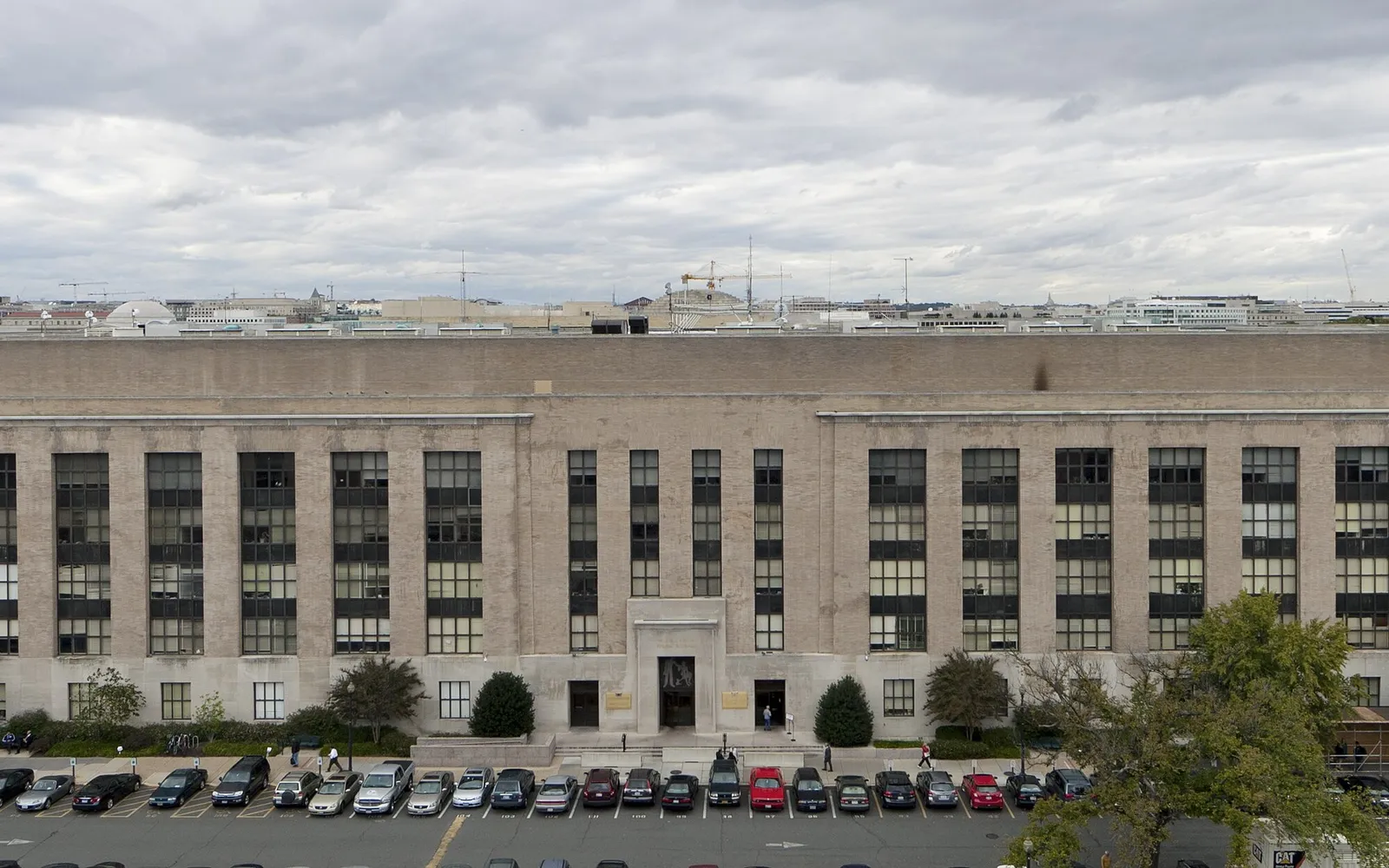
The HHS Office of Inspector General says Medicare could have put an estimated $2.2 billion to better use in fiscal 2024 if hospital payments had followed the 2016 definition of sepsis. The finding is in data brief OEI-02-24-00230, issued Nov. 16, 2026 and posted Nov. 19, 2026. OIG based it on paid Medicare fee-for-service inpatient claims for fiscal 2024.
Medicare still uses a definition of sepsis written in 1991 for billing. Under it, a fever and a fast heart rate with an infection can count as sepsis. The 2016 definition, called Sepsis-3, requires organ dysfunction. A CDC sepsis program and CMS’s hospital quality program already use the 2016 definition. OIG says some insurers, including some Medicare Advantage insurers, use it to set payment.
Where the $2.2 billion comes from
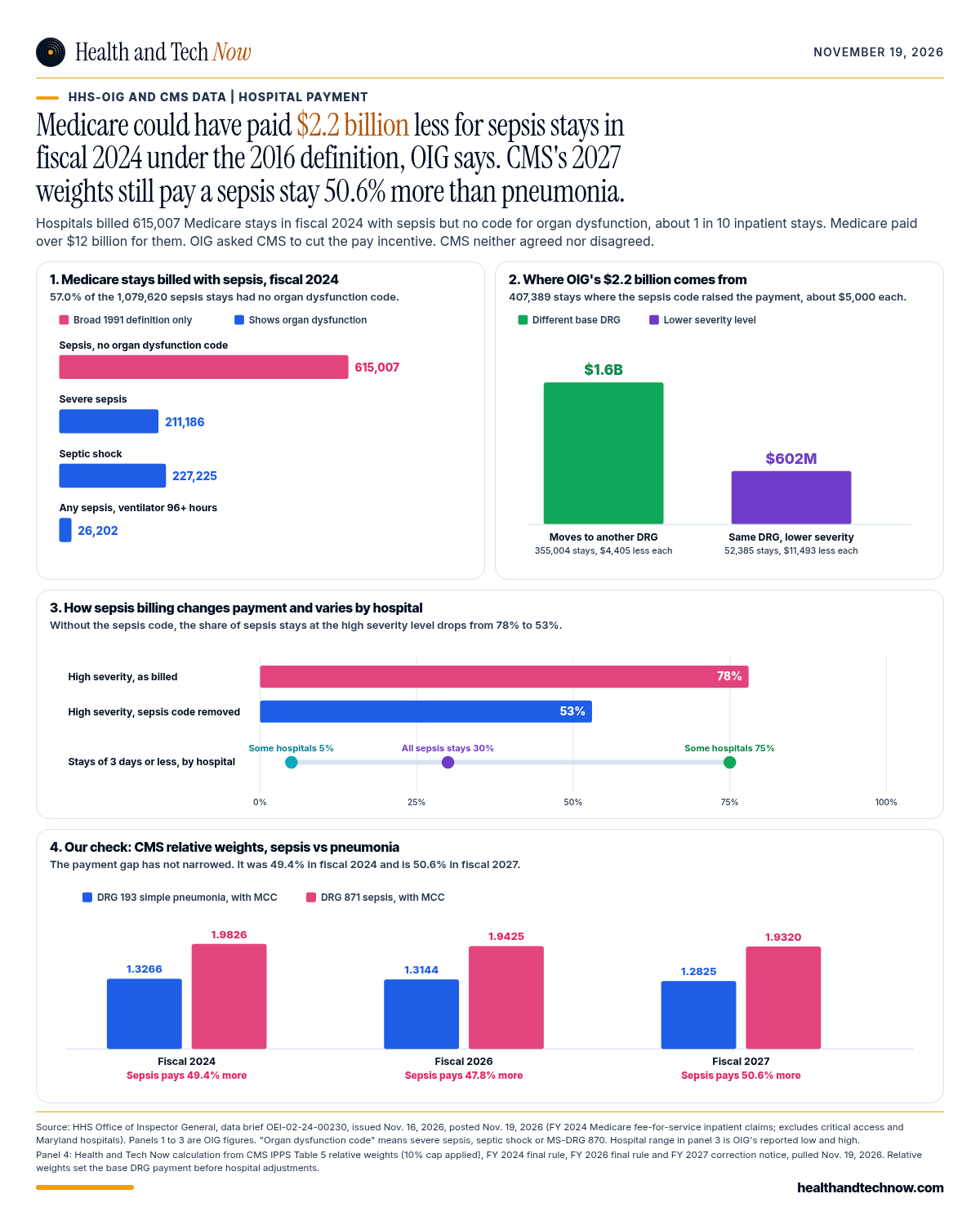
Hospitals billed 615,007 Medicare stays in fiscal 2024 with sepsis but without a code for severe sepsis, septic shock or long ventilator use. That is 9.4% of 6,556,071 inpatient stays. Medicare paid over $12 billion for these stays, about $20,000 each.
In 407,389 of them, the sepsis code raised the payment, by about $5,000 per stay. Without it, 355,004 stays would likely have moved to a different base DRG, most often one for pneumonia or metabolic encephalopathy. Medicare would have paid $4,405 less for each, about $1.6 billion in total. Another 52,385 stays would have stayed in the same base DRG at a lower severity level. Medicare would have paid $11,493 less for each, about $602 million.
Billing varies by hospital
Nationally, hospitals billed about 1 in 10 Medicare inpatient stays with sepsis alone, without severe sepsis or septic shock. Some hospitals billed sepsis on more than 1 in 5 of their Medicare stays. Others billed none.
Stays of 3 days or less were 30% of sepsis stays. At some hospitals that share was 75%, and at others it was 5%. Medicare paid about $16,600 for a stay in MS-DRG 871 whether the patient stayed 3 days or 2 weeks.
Medicare paid 78% of sepsis stays at the high severity level. OIG says that share would likely have been 53% without the sepsis code.
What CMS’s 2027 weights show
Relative weights set the base payment for each DRG before hospital adjustments. Health and Tech Now compared two of them in CMS’s IPPS Table 5 files. MS-DRG 871, sepsis with a major complication, has a weight of 1.9320 in the fiscal 2027 correction notice. MS-DRG 193, simple pneumonia with a major complication, has a weight of 1.2825. The sepsis weight is 50.6% higher. It was 49.4% higher in fiscal 2024 and 47.8% higher in fiscal 2026. The payment gap OIG describes is still in the fiscal 2027 weights.
What OIG asked CMS to do
OIG made two recommendations. CMS should adjust inpatient payments to reduce the financial incentive to bill sepsis stays. CMS should also use its monitoring of hospital sepsis billing to follow up with hospitals. CMS neither agreed nor disagreed and asked OIG to remove both recommendations. OIG kept them.
Only the ICD-10 Coordination and Maintenance Committee can change the sepsis definition in billing codes. CMS and CDC co-chair that committee, and it has not adopted the 2016 definition. OIG says CMS can change how the MS-DRGs pay for the existing codes without waiting for that committee.
OIG’s estimate comes from a claims model. OIG did not review medical records and assumed hospital coding was accurate. The analysis excluded critical access hospitals and hospitals in Maryland.
 HHS Office of Inspector General, data brief OEI-02-24-00230 (issued Nov. 16, 2026; posted Nov. 19, 2026)
 CMS, FY 2027 IPPS final rule and correction notice, Table 5 (pulled Nov. 19, 2026)
- CMS, FY 2026 IPPS final rule, Table 5 (pulled Nov. 19, 2026)
- CMS, FY 2024 IPPS final rule, Table 5 (pulled Nov. 19, 2026)
- Carol M. Highsmith / Library of Congress, Exterior view of the Wilbur J. Cohen Federal Building, Washington, D.C., public domain, no known restrictions (hero, card and og photo)

 AMA