Apple and Samsung watches flag sleep apnea. Medicare still requires a sleep test
Apple's alert caught 66% of moderate to severe cases in its FDA study. Samsung's caught 83%. A watch alert is not a diagnosis, and Medicare pays for CPAP only after a covered sleep test and a 12 week trial.
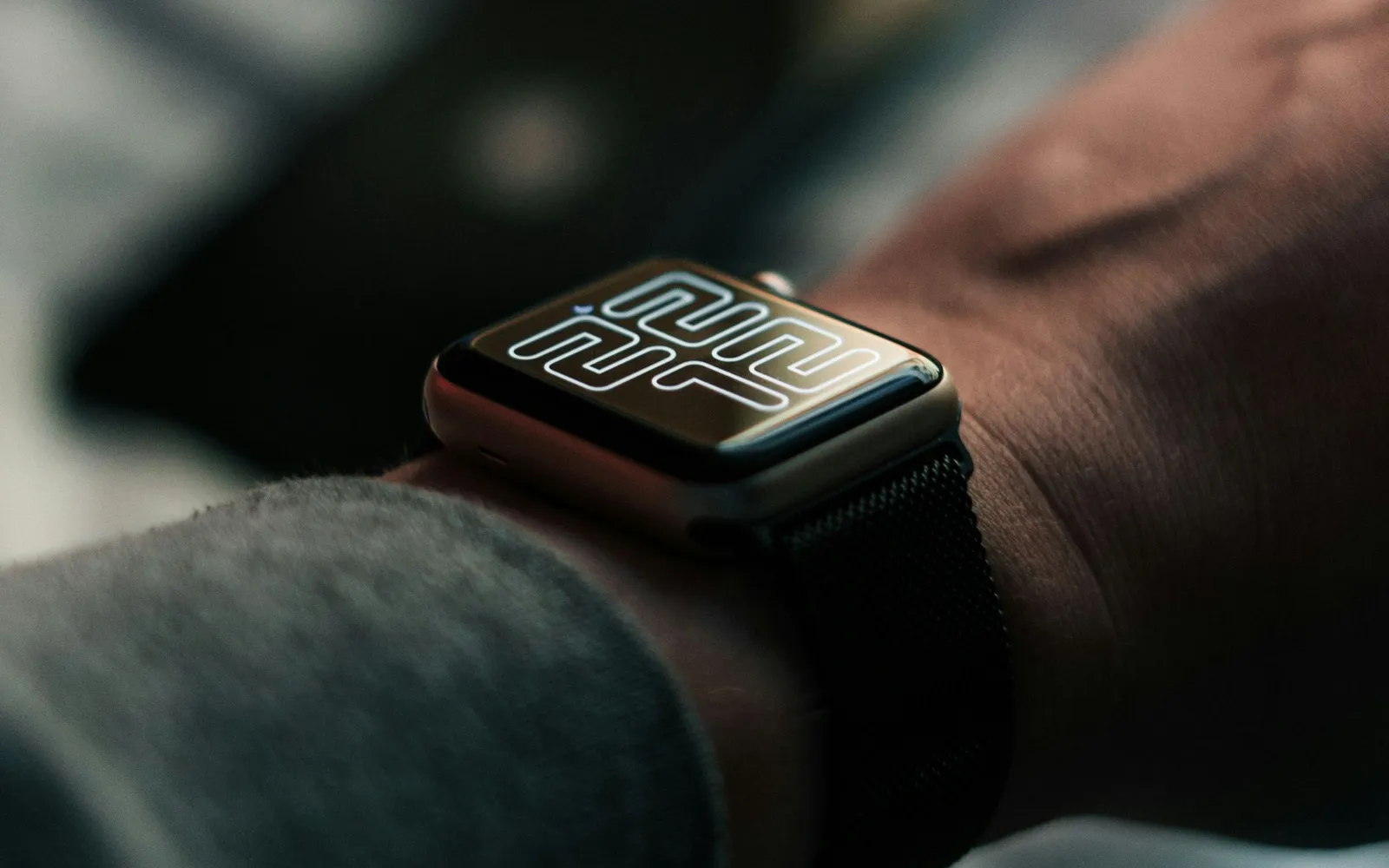
Apple Watch and Samsung Galaxy Watch both carry FDA authorized sleep apnea alerts. In its FDA study, Apple’s alert caught 66.3% of people with moderate to severe sleep apnea. Samsung’s first version caught 82.7% in its own study.
Neither alert is a diagnosis. Both FDA records say so. For a Medicare member, an alert is a reason to call the doctor. Medicare will not pay for a CPAP machine on the strength of a watch.
The prompt for this story is a LinkedIn post by Anthony Warren, who says his company builds smartphone sleep apnea screening. We checked his claims against FDA records, company support pages, the research and CMS coverage rules.
How common it is
The best global estimate is 936 million adults aged 30 to 69 with mild to severe obstructive sleep apnea. Of those, 425 million have moderate to severe cases. That is from Benjafield and colleagues in The Lancet Respiratory Medicine, published July 9, 2019. ResMed, which makes CPAP machines, funded the study.
In the US, a 2016 report for the American Academy of Sleep Medicine put the count at 29.4 million adults, 12% of the adult population. It put the yearly cost of undiagnosed sleep apnea at $149.6 billion.
How many go undiagnosed? A 1997 study in Sleep of 4,925 employed adults in Wisconsin found 82% of men and 93% of women with moderate to severe sleep apnea had never been diagnosed. That is one US group, measured almost 30 years ago. We found no current worldwide figure.
Apple
The FDA cleared Apple’s Sleep Apnea Notification Feature on Sep. 13, 2024, as 510(k) K240929. Samsung’s earlier authorization was the predicate.
How it works, per Apple Support:
- The watch’s accelerometer tracks small wrist movements called breathing disturbances.
- It needs at least 10 nights of sleep data in a 30 day period. It checks every 30 days.
- It runs on Apple Watch Series 9 or later, Ultra 2 or later, and SE 3.
- It is for people 18 and older who have not been diagnosed with sleep apnea.
- You can export a PDF of the data for your doctor.
The FDA study enrolled 1,499 people. A home sleep test was the reference. In 1,278 people analyzed:
- The alert caught 66.3% of people with moderate to severe sleep apnea.
- 98.5% of people without it got no alert.
- No one with normal breathing got a false alert.
Only 153 people in the study, 10.2%, were 65 or older. That is the core Medicare age group.
Apple’s FDA summary says the absence of an alert does not mean the absence of sleep apnea. Apple Support says “not all people with sleep apnea receive a notification.”
Samsung
The FDA granted Samsung’s Sleep Apnea Feature on Feb. 6, 2024, as De Novo DEN230041. That decision created the device category Apple later used.
How it works, per Samsung’s US instructions for use:
- The watch’s light sensor estimates blood oxygen and looks for drops linked to pauses in breathing.
- It needs 2 nights of sleep within 10 days, with about 4 hours of sleep each night.
- It runs on Galaxy Watch4 or later with Wear OS 5.0 and a phone on Android 12 or later.
- It is for adults 22 and older.
- It cannot detect central sleep apnea.
- It is not for people with atrial fibrillation, heart failure, COPD and several other conditions.
Samsung’s US support page says two consecutive nights. The FDA label says 2 nights within 10 days.
The FDA study enrolled 620 people, measured against a full lab sleep study. It caught 82.7% of people with moderate to severe sleep apnea, 167 of 202. 87.7% of people without it got no alert. That missed the study’s own target, per the FDA decision summary. In people over 55, the no alert rate for people without sleep apnea fell to 79%.
Samsung’s second version
The FDA cleared Samsung Sleep Apnea Feature v2.0 on July 20, 2026, as 510(k) K261011. Apple’s feature was the reference device.
Version 2.0 adds the Galaxy Ring and lowers the age to 18. It still needs 2 nights within 10 days. It combines the light sensor, blood oxygen and the accelerometer, per the FDA summary.
| Device | People | Caught moderate to severe | No alert when absent |
|---|---|---|---|
| Galaxy Watch | 475 | 90.8% | 90.3% |
| Galaxy Ring | 469 | 77.9% | 95.9% |
| Watch, age 55+ | 182 | 89.6% | 83.7% |
| Ring, age 55+ | 179 | 78.9% | 96.4% |
The ring caught 63.2% of cases in women.
Samsung said on Oct. 28 that the upgrade starts in Korea in November on Galaxy Watch Ultra 2, Watch9 and Ring, per its Korean newsroom. A US rollout date: MISSING. Samsung has not posted one.
The studies used different reference tests and different people. The numbers line up side by side, but they are not a head to head trial.
What this means for Medicare members
A watch alert does not open the door to CPAP coverage. Three CMS rules set the path.
The sleep test. NCD 240.4.1 covers a lab sleep study and home sleep tests of Type II, III and IV, when you have clinical signs and symptoms of sleep apnea. Type IV devices must record at least 3 channels. Other tests are not covered. Medicare.gov says your doctor must order the test, and you pay 20% after the Part B deductible.
The diagnosis. NCD 240.4 covers CPAP after a clinical evaluation and a positive covered sleep test. You qualify with 15 or more breathing events an hour. You also qualify with 5 to 14 events and a listed problem: daytime sleepiness, impaired thinking, mood disorders, insomnia, high blood pressure, heart disease or a history of stroke. The NCD says other diagnostic tests are not sufficient for CPAP coverage.
The adherence rule. Coverage starts with a 12 week trial. Under LCD L33718, you must use the machine at least 4 hours a night on 70% of nights, in any 30 day stretch in the first 3 months. Your doctor must see you again between day 31 and day 91. If you miss the mark, Medicare requires a new evaluation and a repeat lab study before it pays again.
Per Medicare.gov, you pay 20% of the Medicare approved amount after the Part B deductible. The machine is rented for 13 months in a row, then you own it.
What to do with an alert:
- Export the watch data and bring it to your doctor.
- Tell your doctor about snoring, gasping at night or daytime sleepiness. Those symptoms are what make a covered sleep test possible.
- Ask whether a home test or a lab study fits you.
What to do with no alert: nothing changes. If you have symptoms, see your doctor anyway. Both features miss cases.
What we dropped
Warren estimated 80 to 100 million Apple Watches and 20 to 30 million Samsung watches and rings that can run these features. He called it a rough estimate. Device counts: MISSING. We found no Apple or Samsung figure to check it against.
His “nearly a billion” adults matches the Lancet estimate of 936 million, which covers ages 30 to 69 and counts mild cases. His 80% undiagnosed figure has no worldwide source we could find. The US data we found is in the section above.
His Samsung “two nights” is close. The FDA label says 2 nights within 10 days, with enough sleep each night. Samsung’s ring is covered only under v2.0.
His point that both features flag only moderate to severe cases holds up. Both FDA records say so.
 FDA 510(k) K240929, Apple Sleep Apnea Notification Feature, summary, Sep 13, 2024
- FDA 510(k) database, K240929
- Apple Support, Sleep apnea notifications on Apple Watch (read Oct 31, 2026)
- FDA De Novo DEN230041, Samsung Sleep Apnea Feature, decision summary, Feb 6, 2024
- FDA De Novo database, DEN230041
- Samsung Sleep Apnea Feature, US instructions for use, v1.2, March 2026
- Samsung US Support, sleep apnea feature (read Oct 31, 2026)
- FDA 510(k) K261011, Samsung Sleep Apnea Feature v2.0, summary, Jul 20, 2026
- FDA 510(k) database, K261011
- Samsung Newsroom Korea, upgraded sleep apnea feature, Oct 28, 2026 (Korean)
- Benjafield et al., global prevalence of obstructive sleep apnoea, The Lancet Respiratory Medicine, Jul 9, 2019
 Young et al., clinically diagnosed proportion of sleep apnea syndrome, Sleep, Sep 1997
- American Academy of Sleep Medicine, economic burden of undiagnosed sleep apnea, 2016
 CMS National Coverage Determination 240.4, CPAP therapy for obstructive sleep apnea
- CMS National Coverage Determination 240.4.1, sleep testing for obstructive sleep apnea
- CMS Local Coverage Determination L33718, positive airway pressure devices
 Medicare.gov, sleep studies
- Medicare.gov, CPAP devices and supplies
 Anthony Warren, LinkedIn post on wrist sleep apnea screening, Oct 2026
 PR Newswire
 Google

 CDC