HealthcareHealthcare & Insurance
Medicaid GLP-1 obesity spending fell 80% in 4 states
Four states dropped Medicaid coverage of GLP-1 drugs for weight loss on Jan. 1. Our count of CMS drug data shows their gross Medicaid spending on Wegovy and Zepbound fell $628 million in one quarter.
Four state Medicaid programs that dropped coverage of GLP-1 drugs for weight loss on Jan. 1, 2026 cut their gross spending on Wegovy and Zepbound from $787.2 million in the fourth quarter of 2025 to $159.0 million in the first quarter of 2026, a drop of $628 million, according to a Health and Tech Now analysis of CMS Medicaid State Drug Utilization Data.
The states are California, Pennsylvania, New Hampshire and South Carolina. California, Pennsylvania and New Hampshire ended coverage of Wegovy and Zepbound for weight loss. South Carolina removed Wegovy and Saxenda for obesity and did not name Zepbound. Prescriptions for Wegovy and Zepbound in the four states fell from 659,354 to 134,240, down 79.6%. Prescriptions for the diabetes brands of the same drugs, Ozempic and Mounjaro, which stayed covered, fell 2.3% in the same states (392,789 to 383,697). In all other states and DC combined, Wegovy and Zepbound prescriptions rose 7.4% (436,172 to 468,307) and gross spending rose 9.2% ($486.5 million to $531.3 million).
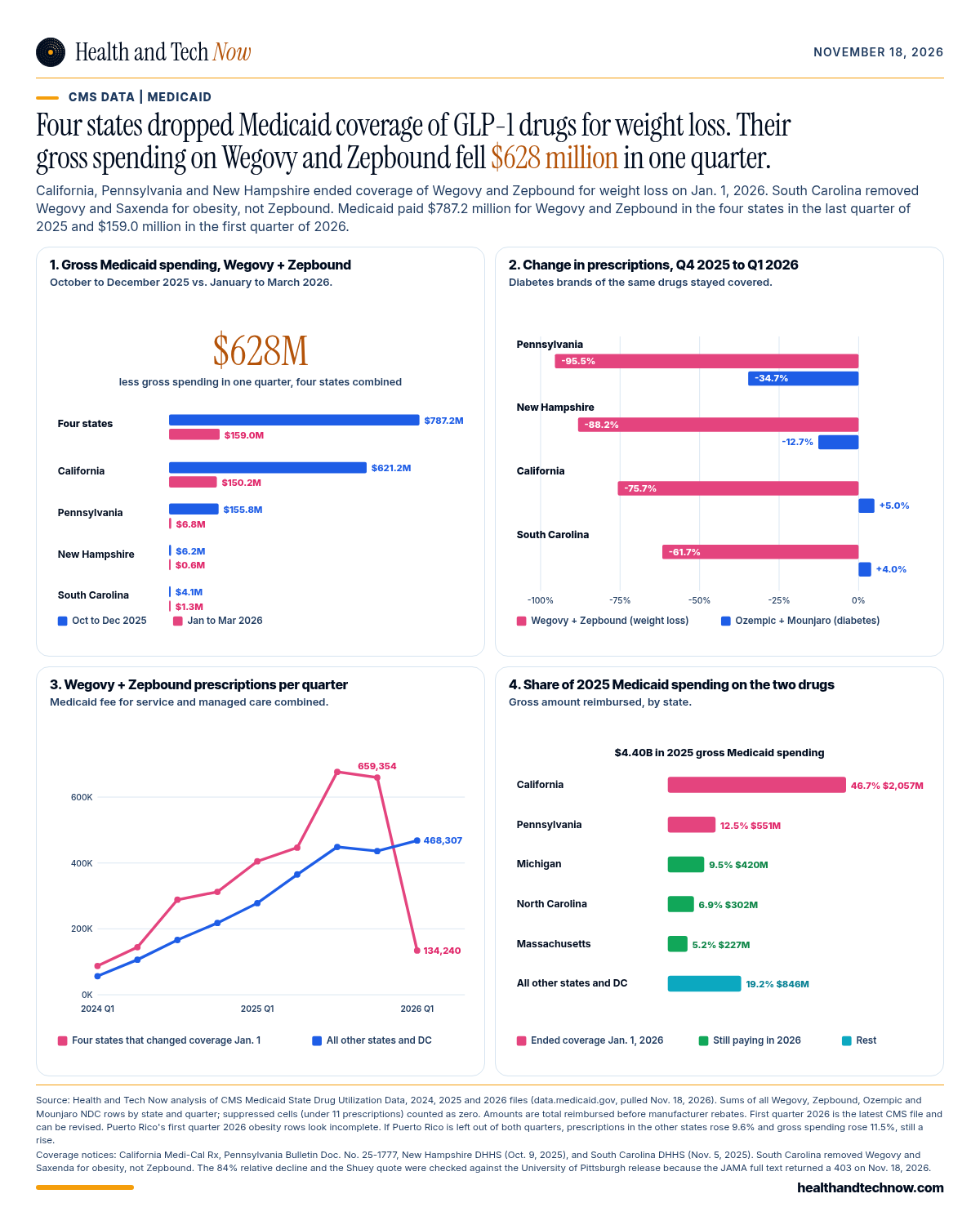
By state, prescriptions fell 95.5% in Pennsylvania, where gross spending went from $155.8 million to $6.8 million. New Hampshire fell 88.2% ($6.2 million to $0.6 million). California fell 75.7% ($621.2 million to $150.2 million). South Carolina fell 61.7% ($4.1 million to $1.3 million). South Carolina’s drop was in Wegovy. Zepbound prescriptions in the state rose slightly.
Medicaid’s gross spending on Wegovy and Zepbound nationwide was $4.40 billion in 2025 across 3,715,489 prescriptions. California alone was 46.7% of that ($2.06 billion) and Pennsylvania 12.5% ($551 million). The next largest were Michigan (9.5%, $420 million), North Carolina (6.9%, $302 million) and Massachusetts (5.2%, $227 million).
University of Pittsburgh researchers led by Bryant Shuey published a JAMA research letter on Nov. 16, 2026 using the same CMS data. They found prescriptions in the four states fell about 84% relative to states that kept coverage. “The decline was immediate and substantial,” Shuey said. The 84% figure and the quote were checked against the University of Pittsburgh release because the JAMA full text returned a 403 on Nov. 18, 2026.
Federal law requires Medicaid to cover nearly all approved outpatient drugs but lets states exclude drugs used for weight loss, the University of Pittsburgh said. Since 2022, 17 state Medicaid programs have chosen to cover GLP-1 drugs approved for weight loss, often with prior authorization. Nationally, quarterly prescriptions for these drugs rose from 14 to 800 per 100,000 Medicaid beneficiaries between the first quarter of 2022 and the first quarter of 2026, the researchers found.
Amounts are the total reimbursed reported to CMS, before manufacturer rebates. Medicaid drug rebates are confidential and are not in this file. Suppressed cells (fewer than 11 prescriptions) are counted as zero. The first quarter of 2026 is the latest CMS file and can be revised. Puerto Rico’s first quarter 2026 obesity rows look incomplete. If Puerto Rico is left out of both quarters, Wegovy and Zepbound prescriptions in the remaining other states rose 9.6% and gross spending rose 11.5%, still a rise.
CMS’s second quarter 2026 file will show whether the drop held in the four states.
 CMS Medicaid State Drug Utilization Data 2025 (data.medicaid.gov, updated July 13, 2026)
- CMS Medicaid State Drug Utilization Data 2026 (data.medicaid.gov, updated July 10, 2026)
- California Medi-Cal Rx member notice, Changes to GLP-1 Drug Coverage, Effective January 1, 2026
- Pennsylvania Bulletin, Doc. No. 25-1777 (Dec 27, 2025)
- New Hampshire DHHS provider notice, Change in Medicaid Coverage for GLP-1 Medications (Oct 9, 2025)
- South Carolina DHHS managed care memo, GLP-1 Coverage (Nov 5, 2025)
 JAMA research letter, GLP-1 Utilization Following Withdrawal of Medicaid Coverage for Weight Loss (Nov 16, 2026)
- University of Pittsburgh School of Medicine news release (Nov 2026)
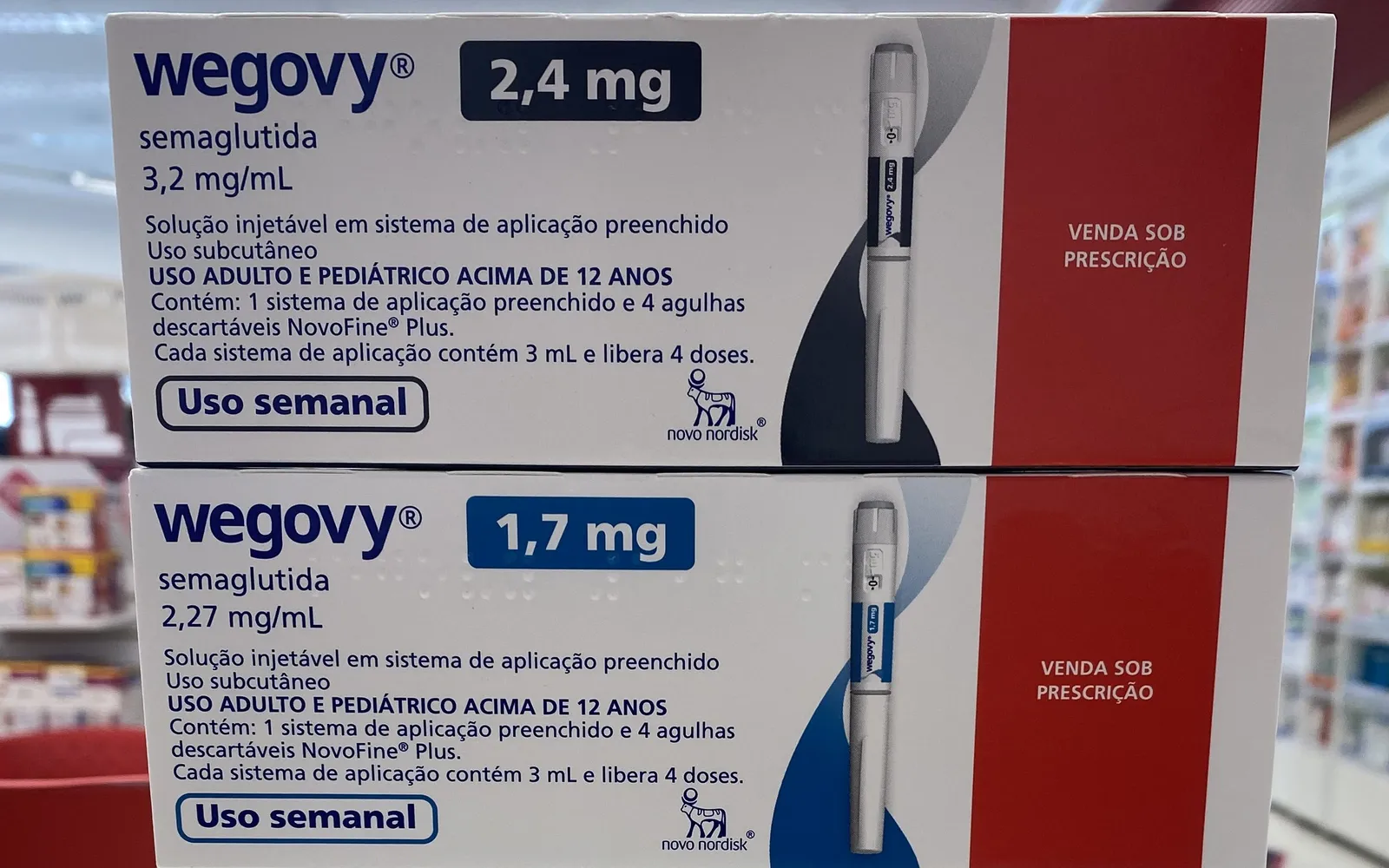
- Nelson R. de Lima Filho, four Wegovy dose boxes on a pharmacy counter, July 30, 2024, CC BY 4.0, Wikimedia Commons (hero/og crop)
 news.bswhealth.com

 CMS

 Federal Register