FDA approves Talzenna pair that cut prostate cancer risk 52%
Pfizer's Talzenna with enzalutamide is now approved earlier, for men whose prostate cancer has spread but still responds to hormone therapy and who carry an HRR gene mutation. A tumor or blood test decides who qualifies. Survival data are not mature.
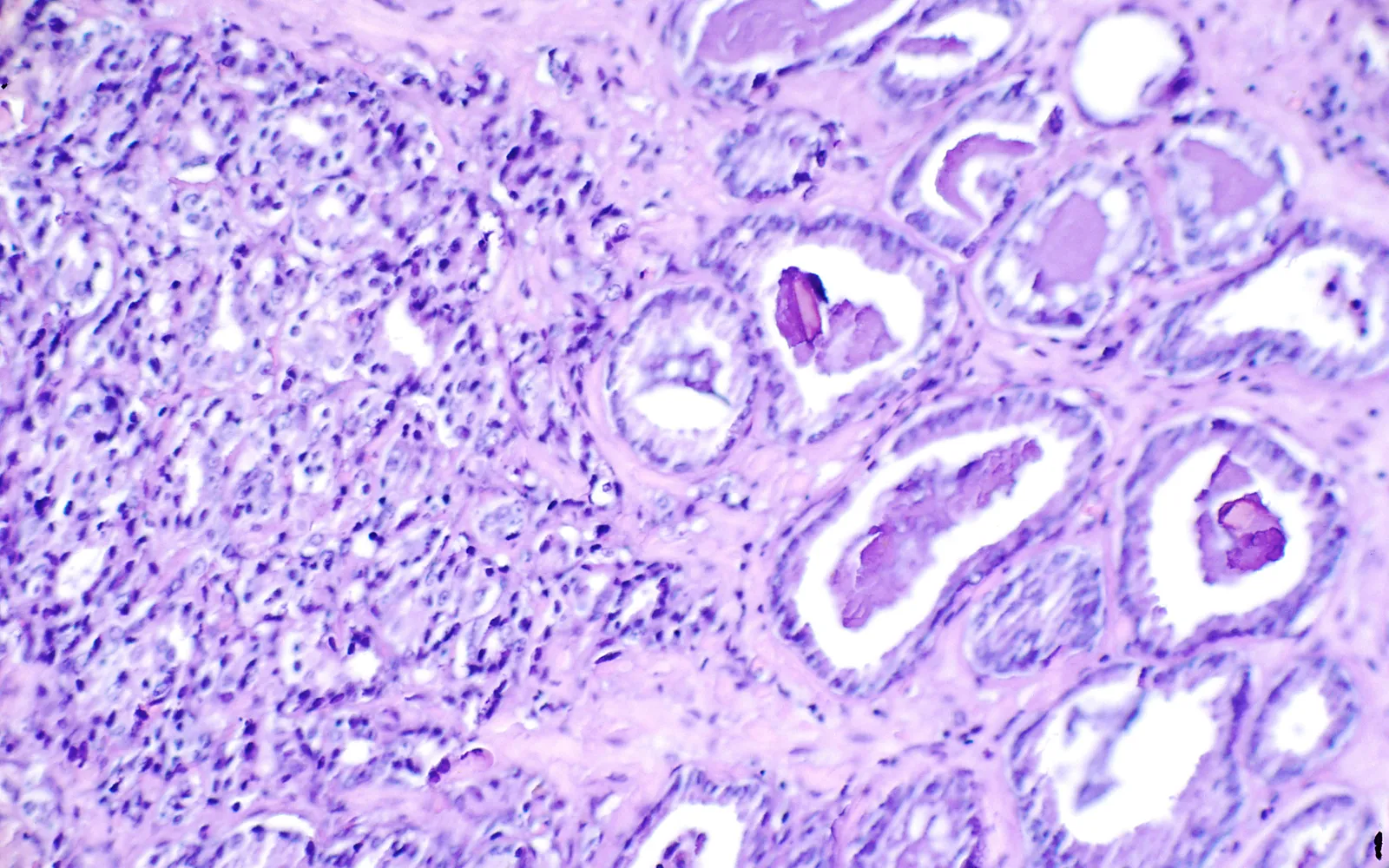
The FDA approved Pfizer’s Talzenna with enzalutamide on Oct 26 for a group of men with spread prostate cancer, after the pair cut the risk of the cancer growing or death by 52% in a trial, per Pfizer’s release. The agency posted the decision in its approval notice.
Enzalutamide is sold as Xtandi, which Pfizer and Astellas sell together in the US. Both drugs are pills taken once a day.
Who qualifies
The approval covers adults whose prostate cancer has spread and still responds to hormone therapy. Doctors also call this metastatic hormone sensitive prostate cancer.
The cancer must carry a mutation in one of 12 homologous recombination repair (HRR) genes, including BRCA1, BRCA2, ATM and CHEK2. These genes help cells fix damaged DNA. A tumor tissue test or a blood test finds the mutation. The FDA had already approved two tests, FoundationOne CDx and FoundationOne Liquid CDx, to pick patients.
About 25% of men at this stage carry an HRR mutation, Pfizer said in its release, citing a 2022 study.
Men on the combination also stay on hormone therapy that lowers testosterone, or must have had both testicles removed, per the FDA.
What the trial found
TALAPRO-3 randomized 599 men to enzalutamide plus either Talzenna or a placebo. All stayed on hormone therapy. Neither the patients nor their doctors knew who got which drug. Sites were in the US, Canada, Europe, South America and the Asia Pacific region, per Pfizer.
The main goal was the time until scans showed the cancer growing, or death. On enzalutamide alone, half the men reached that point by 45.8 months. On the combination, fewer than half had reached it when the data were analyzed, so no median exists yet. The hazard ratio was 0.48, per the FDA. Pfizer reports that as a 52% lower risk of the cancer growing or death.
An estimated 77% of men on the combination had no cancer growth at three years, Pfizer said. The benefit held for men with BRCA and with other HRR mutations.
Overall survival data were not mature at the time of that analysis, the FDA said.
Side effects
Anemia was the main problem. Severe anemia, grade 3 or higher, hit 51% of men on the combination and 3% on enzalutamide alone, per Pfizer. Five percent stopped Talzenna because of it.
The label warns about two rare blood cancers, myelodysplastic syndrome and acute myeloid leukemia. Across 1,096 patients who took Talzenna in studies, about 1% got one of them, and 0.6% died of it, Pfizer said. It also warns about low blood counts and harm to an unborn baby.
What changed
The FDA first approved the pair in June 2023, for HRR mutated prostate cancer that had stopped responding to hormone therapy. This approval moves it to an earlier stage, when the cancer still responds.
The FDA gave the application priority review. It ran the review with Australia’s Therapeutic Goods Administration and Health Canada, whose reviews are ongoing. A European application is also under review. The dose is 0.5 mg of Talzenna a day.
The results were presented at the 2026 ASCO meeting and published in The New England Journal of Medicine. Pfizer gave no price in its release.
Why it matters: About one in four men at this stage carry an HRR mutation. A gene test decides who gets the new option, so the test is the first step.


 CIDRAP

 Eli Lilly
 Bristol Myers Squibb