His watch and ring logged a decline months before he died
A Stanford case report found one man's watch and ring shifted together 4 to 6 months before his sudden cardiac death. It is one case, studied after he died.
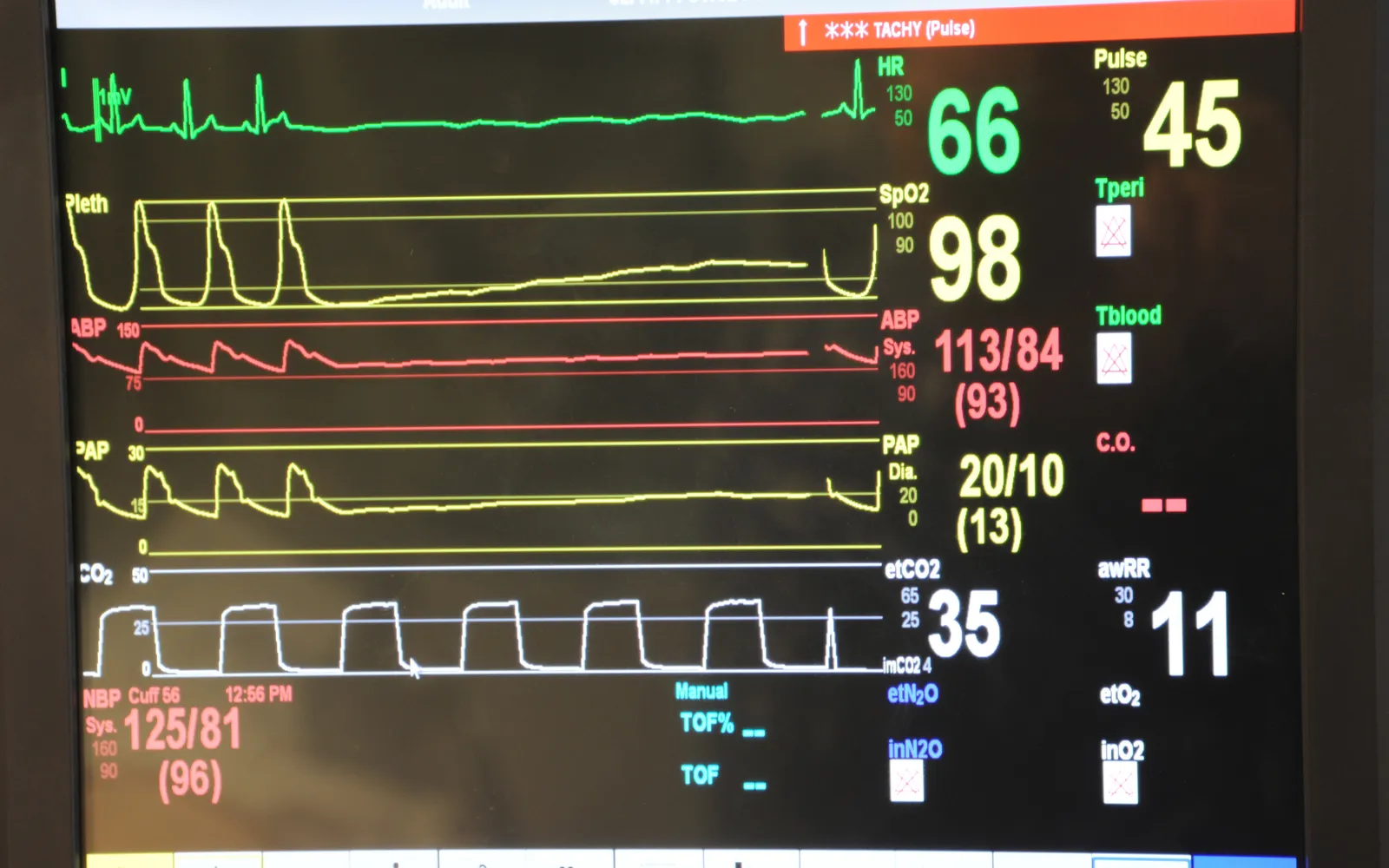
A Stanford Medicine team went back through one man’s smartwatch, smart ring and exercise bike data after he died suddenly. Most of the shifts they found in his heart rate, sleep and walking data clustered 4 to 6 months before his death.
This is one case, studied in hindsight. The authors write: “This case does not show that wearables predict sudden cardiac death; a retrospective n-of-1 cannot.”
The case report ran online in JACC: Case Reports on Sep 25 (doi:10.1016/j.jaccas.2026.110397). Ziv Lautman is the lead author. Michael Snyder, director of the Stanford Center for Genomics and Personalized Medicine, is the senior author.
The case
The patient was a 76 year old man with known structural heart disease. Stanford Medicine says he studied wearables and longevity and worked with Snyder. His wife gave the team his data.
On March 21, 2025, he finished a 30 minute high intensity ride on his Peloton bike, his 530th recorded workout. Three minutes later his Apple Watch detected a fall. Paramedics found ventricular fibrillation and worked on him for 39 minutes before he was pronounced dead.
No autopsy was done. The paper says the mechanism of death “cannot be definitively established.”
What the devices recorded
The team used an Apple Watch Series 5 and 7 with about 5 years of data. It added an Oura Ring Gen 3 with about 2 years and the Peloton bike with about 7 years. They focused on about 18 months starting Oct 15, 2023, when the watch and ring both logged dense data.
The paper reports that a change point test found a significant shift in 30 of 35 signals. Most of those shifts landed between Sep 23 and Dec 4, 2024. The paper calls it “an abrupt, synchronized shift across physiological systems and 2 independent devices, rather than a gradual drift.”
The paper’s figures compare the 30 days before and after each signal’s shift:
- Daytime heart rate variability on the watch fell from 179 to 91 milliseconds.
- Nighttime heart rate variability on the ring fell from 180 to 63 milliseconds.
- Resting heart rate rose from 44 to 49 beats per minute.
- Deep sleep fell from 39 to 18 minutes a night.
- Estimated 6 minute walk distance fell from 465 to 415 meters.
Heart rate variability, breathing rate and deep sleep stayed down through his last records, the paper says. His average nighttime heart rate kept rising until he died. Walking steadiness also declined from late 2024.
Two signals did not fit a simple decline. Nighttime breathing rate fell and blood oxygen rose. An earlier cluster of gait and sleep changes, from mid April through July 2024, matched his recovery from hernia surgery.
His care in late 2024
The wearable shifts overlapped with a clinical workup. He reported fatigue, and an Oct 31, 2024 primary care visit found a heart murmur. An echocardiogram on Nov 6 showed severe left ventricular dilation and severe mitral regurgitation, “consistent with advanced structural heart disease.”
A cardiology appointment was set for 11 days after his death, according to the paper. The visit note recorded fatigue that “doesn’t prevent from exercise 15 miles.”
His heart rate during workouts was logged the whole time. The paper says those data “were not among the data considered at that visit.” From 2018 to 2024 he was seen in 3 health systems in 2 regions by several physicians.
The workouts
From Jan 1 to Mar 21, 2025, he did 69 indoor rides. That beat his total for all of 2024, which was 59.
On his final ride his heart rate neared 150 beats per minute. The paper puts his age predicted maximum at 144 and the American Heart Association exercise ceiling for his age at 128.
The gap between data and care
“There were multiple strong indicators that something was off. Where the system needs improvement is in relaying that information,” Snyder said in the Stanford release on Sep 29.
He added that “we also need an alert system, something like a check-engine light for your health.”
The paper notes there is no reference range for a single heart rate variability reading. Its focus is change from a person’s own baseline.
The authors list what this case lacks: “prospective, personal-baseline change-detection with prespecified alarm rules, validated against adjudicated outcomes.” This paper does not test such a system.
The paper ends on the data itself. It says “the data a patient already generates, and a physician rarely sees, remains among the largest untapped inputs in cardiovascular medicine.”
Stanford says the team hopes to recruit up to 1,000 patients for a clinical trial. It gave no start date.
Disclosures
The paper lists Snyder as a cofounder, adviser or equity holder in 37 companies. Lautman is a cofounder of Greenlue Inc. Apple, Oura and Peloton are not among the companies listed.
Related coverage
WHOOP’s spending study covered 80 employees at one employer. Alloop’s new ring and band tracker launched with no accuracy data. Oura’s Cardio Effort now grades weekly heart strain. CMS has proposed new rules for who handles paid remote monitoring in Medicare, covered in our explainer.


 JMIR Formative Research

 Alloop
 TechCrunch