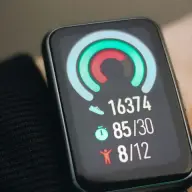
FDA will treat most apps that come with prescription drugs like ads, unless the drugmaker proves they help
Under final guidance released Oct 20, a dose reminder or symptom tracker only becomes part of a drug's official label if it is essential to safe use or a well-controlled study shows it improves a clinical outcome.

The Food and Drug Administration released final guidance on Oct 20 for apps and other software that drug companies offer alongside their prescription medicines. It settles when that software belongs on a drug’s official label and when FDA treats it as promotion. It finalizes a draft from Sep 19, 2023, and the notice ran in the Federal Register on Oct 21.
Most of these apps will count as promotion. In its announcement, the agency said that in most cases, content a companion app shows to users will be treated as promotional material, the same way FDA handles other drug advertising.
What counts
The guidance covers software distributed by a drug company, or by a developer working under an agreement with one, for use with a prescription drug. FDA calls what the app shows the user “end-user output.” That includes screens and sounds or audio messages, and FDA considers all of it a type of prescription drug labeling.
A general app from an unrelated developer is outside the guidance, even if it is meant to be used with medicines. The deciding question is whether the drug company is behind it.
Two kinds of apps
FDA sorts companion software into two groups.
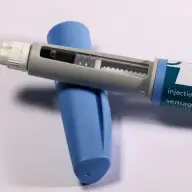
The first connects to a device that is part of the drug product. The guidance gives examples: an inhaler that records each use and an app that shows how many doses are left, or an autoinjector that logs when it was used. The drug’s prescribing information should briefly describe that connection. What the app displays is still generally promotional labeling, unless one of the two tests below is met. For these connected apps, FDA says it will check that the data and any analysis are accurate and reliable, and drugmakers should show the software won’t lead to medication errors such as extra doses.
The second group is standalone software that relies on what the user types in, such as symptom trackers, dose reminders and health coaching tools. These should not be described in the prescribing information at all, unless they pass one of the same two tests.
The two tests
An app moves onto the official label if FDA finds it essential to using the drug safely and effectively. It can also qualify if the drug company shows, through one or more adequate and well-controlled studies, that using the drug with the app gives a meaningful improvement in a clinical outcome compared with the drug alone. The guidance’s example is a diabetes drug app with dose reminders, blood glucose and weight tracking, and cognitive behavioral therapy.
If an app passes, its content becomes FDA-required labeling. Certain later changes to it would then need FDA review and approval, the same as other label changes.
Filing with FDA
App content that counts as promotion must be filed with FDA on Form FDA 2253 when it is first released to users. Updates to that content have to be filed too. Updates that don’t change what users see, such as security patches or operating system changes, don’t need to be refiled. Some apps may also need a separate device marketing submission and FDA authorization.
Like other FDA guidance, the document is labeled nonbinding recommendations.
“Companion apps are quickly moving beyond simple dose reminders toward tools that adapt to each patient,” Jared Seehafer, FDA’s deputy commissioner for technology, said in the announcement.
Why it matters
The price of getting an app onto a drug’s label is a clinical study showing it helps, so most drugmaker apps will stay in the marketing column, where FDA reviews what they say the way it reviews an ad.

 NovoCare (Novo Nordisk)
 Google