What the FDA has actually cleared in cuffless blood pressure
One ring is cleared for spot checks in adults 22 to 50 with no cuff. A wrist monitor is cleared but needs a cuff every day. A third ring ships with no FDA review at all. Here is what each label says, and what it means for Medicare monitoring.

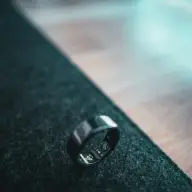
Three blood pressure wearables now sit in three different places with the FDA. Happy Health’s ring software is cleared with no cuff calibration, but only for spot checks in adults 22 to 50. Aktiia’s G0 wrist monitor is cleared, but it needs a cuff reading every 24 hours. Signal Ring, a $399 ring from Vital Signals, starts shipping with no FDA review at all.
The marketing for all three talks about all-day and overnight readings. The labels say less.
Happy Health: cleared, with a narrow label
The FDA cleared the Happy Health Blood Pressure Monitor on Sep 3, 2026, under 510(k) K254000. It is a Class II device under product code DXN, the code used for non-invasive blood pressure monitors such as home cuffs. The cleared product is software. It reads optical (PPG), skin conductance, motion and skin temperature signals from Happy’s own ring, which the FDA cleared separately in 2024 under K240236, and calculates systolic and diastolic pressure in the cloud.
According to the 510(k) summary, the software needs no calibration with a cuff and no starting input of age or other patient details. The summary says it uses a biophysics-based model, not machine learning.
The indications are specific. The software is cleared to “derive spot-check measurements” for people aged 22 to 50, at home or in a clinic. It only measures and displays, and the label says it “makes no diagnosis.” It should not be used by people with arrhythmias such as atrial fibrillation, severe vascular disease, Raynaud’s syndrome, people taking vasoactive drugs, or people who are pregnant. It is not for use during motion or with low perfusion.
Happy Health tested the software against arterial lines, the invasive reference standard, under the ISO 81060-2 standard. The study had 85 people and 850 paired readings, and no one was excluded. The FDA summary reports a mean systolic error of 0.81 mmHg with a standard deviation of 6.09 mmHg, and a mean diastolic error of 0.12 mmHg with a standard deviation of 3.16 mmHg. The company’s Oct 5 release gives the mean errors but not the standard deviations. The standard deviation shows how far single readings can miss.
That release says the FDA cleared the ring “to measure ongoing, clinical grade blood pressure” and describes measurements “across day and night.” The FDA label uses the phrase “spot-check.”
Aktiia G0: cleared, but tied to a cuff
Happy Health named Aktiia’s G0 Blood Pressure Monitoring System (K250415, cleared Jul 2, 2025) as its predicate, the device it showed it was substantially equivalent to. The comparison table in Happy’s 510(k) summary describes G0 as a wrist monitor plus an oscillometric cuff, cleared for spot checks in adults 22 to 59, “following a calibration process (every 24 hours)” with the cuff.
So the FDA already had a cleared wrist device that estimates pressure from pulse waves. Happy Health’s clearance removes the daily cuff step, and its age range is narrower.
Signal Ring: no FDA review, by design
Vital Signals said on Oct 20 that Signal Ring will ship “in the coming weeks” at $399, with no subscription and no cuff calibration, and that buyers can pay with HSA or FSA funds. The release says the ring “has not been reviewed or cleared by the FDA and is currently investigational.” Its FAQ says HSA and FSA checkout runs through Truemed “for qualified customers,” and its site says the ring is “not intended to diagnose, treat, cure, prevent, or monitor high blood pressure.”
We could not find accuracy data for Signal Ring against an arm cuff or an arterial line published anywhere.
How WHOOP moved the line
The FDA took a hard position on this kind of product in 2025. On Jul 14, 2025, it sent WHOOP a warning letter over its Blood Pressure Insights feature, saying a blood pressure estimate “is inherently associated with the diagnosis of hypo- and hypertension.” It said WHOOP’s disclaimers were “insufficient,” and that “providing blood pressure estimation is not a low-risk function.”
Then the FDA rewrote its general wellness guidance. The Jan 6, 2026 version says the FDA may treat products that use non-invasive sensing to estimate values such as blood pressure as wellness products. The output has to be solely for wellness, must not prompt clinical action and must not claim to substitute for a cleared device. Values that mimic clinical ones have to be validated. The same guidance says products meant for “screening, diagnosis, monitoring, alerting, or management of a disease” are not wellness products, and it names blood pressure monitors as an example.
On Jun 17, 2026, the FDA closed out the WHOOP case. Citing changes WHOOP made to the feature and its labeling, and the updated guidance, it said it “does not intend to enforce” device requirements for the modified product.
Signal Ring’s disclaimer fits that path. Under the new guidance, a ring can show blood pressure as a wellness number without FDA review, as long as it doesn’t claim to manage high blood pressure.
What the nighttime data shows
Happy Health’s case for overnight readings rests on a 2023 Lancet study by Staplin and colleagues. They followed 59,124 primary-care patients in the Spanish Ambulatory Blood Pressure Registry, all referred for a hypertension workup, for a median 9.7 years. Their mean age at entry was 58.7. Over that time, 7,174 died, 2,361 of them from cardiovascular causes.
Night-time pressure came from 24-hour monitors with an arm cuff (Spacelabs 90207), set to read every 30 minutes overnight. Among the top four-fifths of each measure, each 1-SD rise in night-time systolic pressure (11.5 mmHg) carried a hazard ratio of 1.50 for cardiovascular death and 1.42 for death from any cause, after adjusting for age, sex and other risk factors. For clinic systolic pressure, the all-cause figure was 1.18.
The study also compared how much each measure added to the risk model, using a chi-square statistic. With clinic systolic set at 100%, night-time systolic scored 604% for cardiovascular death and 591% for all-cause death.
That is where the “six times” figure in Happy Health’s materials comes from. The release words it correctly, as “6.04 times as informative.” It is a ratio of model statistics. It does not mean six times the risk, and the readings came from arm cuffs worn for one day. No published study yet shows that Happy Health’s ring, or any cuffless wearable, captures the same prognostic signal overnight.
Why the age limit matters for Medicare
Medicare pays for remote patient monitoring when a connected device sends readings such as blood pressure to a practice. CMS requires the device to meet the FDA’s definition of a medical device, to upload data automatically, and to cover an acute or chronic condition. CMS’s 2027 proposal would also change who can do that work and how it is paid, as we explained in our CMS remote monitoring proposal explainer.
CMS lists connected blood pressure cuffs among its examples of RPM devices, and most Medicare patients are 65 or older. Happy Health’s calibration-free clearance stops at age 50 and excludes people with atrial fibrillation. Aktiia’s G0 stops at 59 and needs a daily cuff reading. A practice that put Medicare patients on Happy Health’s ring would be using it outside the cleared age range for nearly all of them. A wellness product like Signal Ring says on its own site that it is not meant to monitor high blood pressure, and that is the condition RPM is meant to monitor.
What would settle it
Three kinds of data would show whether cuffless readings can stand in for a cuff in Medicare care. The first is a clearance or study that covers adults over 65, including people with atrial fibrillation. The second is overnight ring readings compared with 24-hour cuff monitoring in the same people. The third is outcome data linking ring-measured night-time pressure to strokes, heart attacks or deaths.
Why it matters
Cuffless blood pressure now runs on two tracks. A cleared device carries a tested accuracy claim for a defined group of people. A wellness device carries no accuracy claim the FDA has reviewed. For a Medicare practice, the label decides which patients a device is cleared for, and neither cuffless clearance covered here reaches age 65.
- FDA 510(k) K254000, Happy Health Blood Pressure Monitor, decision letter and summary, Sep 3, 2026
- FDA 510(k) database, K254000
- FDA 510(k) database, K250415, Aktiia G0 Blood Pressure Monitoring System, Jul 2, 2025
- Happy Health press release, Oct 5, 2026
- MedCity News, Happy Health's cuffless BP device wins FDA clearance, Oct 13, 2026
 Vital Signals press release, Signal Ring, Oct 20, 2026
- Signal Ring FAQ (read Oct 21, 2026)
 FDA warning letter to WHOOP, Inc., Jul 14, 2025
- FDA close-out letter to WHOOP, Inc., Jun 17, 2026
- FDA, General Wellness: Policy for Low Risk Devices, Jan 6, 2026
- Staplin et al., The Lancet 2023;401:2041-2050 (open-access copy, UCL Discovery)
 CMS, Remote Patient Monitoring
- CMS MLN901705, Telehealth and Remote Monitoring, Dec 2025
 Oura